



British Citizenship by Naturalisation
- Home
- »
- Personal Immigration
- »
- British Citizenship
- »
- Naturalisation
British Citizenship Requirements - 2026 Application Guidance
Table of Contents
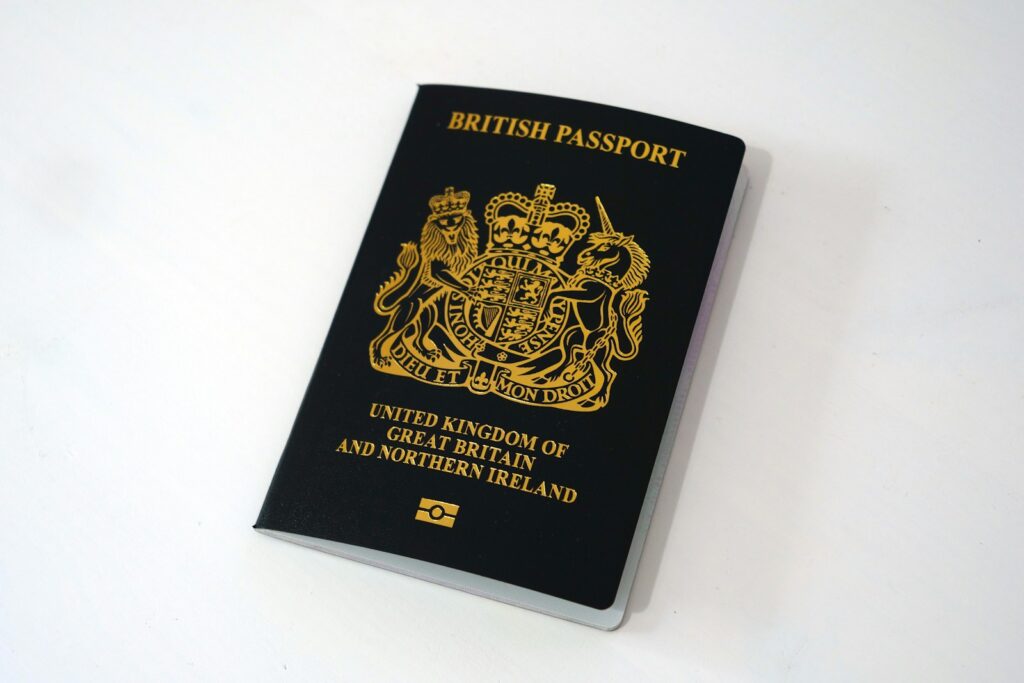
The British citizenship application is the last step in your UK immigration journey. Once you are British, you will be able to vote in UK elections, get a British passport and travel smoothly across the UK borders.
There are two principal legal routes to becoming a British citizen, depending on your age, background, family history, and immigration status:
- Registration as a British citizen, where a person already has a legal entitlement or qualifies under specific provisions of the British Nationality Act 1981
- Naturalisation, which applies to individuals who have lived in the UK lawfully for a qualifying period and meet the statutory requirements
Naturalisation is the most common route for adults to become British citizens. It is a formal legal process under the British Nationality Act 1981, and unlike some immigration applications, it is not a right but a discretionary decision made by the Home Secretary. Applicants need to satisfy a number of statutory requirements to be considered eligible.
An applicant who has held Indefinite Leave to Enter (ILE), Indefinite Leave to Remain (ILR), or Settled Status for at least 12 months, and meets other requirements, such as residence requirement, intention to live in the UK requirement, good character requirement, and English language and the Life in the UK requirements, the applicant may be eligible to apply. If the applicant is married to or in a civil partnership with a British citizen, the requirement to have held that status for 12 months does not apply.
Becoming a British citizen through naturalisation does not automatically grant you a British passport. If your application is approved, you will receive a Certificate of Naturalisation and must attend a citizenship ceremony, during which you will take an oath or affirmation of allegiance. Only after completing these formalities can you apply for first British passport.
Naturalisation brings long-term stability, particularly with the UK transitions to a fully digital immigration system (eVisa), British citizens are expected to use a valid British (or Irish) passport when entering the UK.
The process is technical, and mistakes or missing information can result in refusal. Applicants must demonstrate continuous lawful residence in the UK for a qualifying period of either five years or three years (if married to a British citizen).
Below is an overview of the key eligibility requirements for naturalisation:
What are the Requirements of Naturalisation under the British Nationality Act 1981?
The legal requirements under Section 6(1) of the British Nationality Act 1981 that the Applicant must meet in order to succeed in their application are as follows:
- They are aged 18 or over at the date of application;
- They are of sound mind, so that they understand the step they are taking;
- They intend to continue living in the UK;
- The Applicant is a person of Good Character;
- They meet the English Language requirement;
- The Applicant has sufficient knowledge about the Life in the UK;
- The Applicant was in the UK at the beginning of the period of five years ending with the date of the application, and that the number of days on which he was absent from the United Kingdom in that period does not exceed 450; and
- The number of days on which the Applicant was absent from the United Kingdom in the period of twelve months so ending does not exceed 90; and
- The Applicant was not at any time in the period of twelve months so ending subject under the immigration laws to any restriction on the period for which he might remain in the United Kingdom; and
- The Applicant was not at any time in the period of five years so ending in the United Kingdom in breach of the immigration laws
What Are the Residence and Absence Requirements for British Citizenship by Naturalisation?
Applicants must be able to demonstrate a period of continuous residence in the UK without excessive absences. For most applicants, this involves a 5-year qualifying period, during which total absences from the UK must not normally exceed 450 days, and absences in the final 12 months before the application must not exceed 90 days. Applicants must also have been physically present in the UK at the start of the 5-year period.
What if I am married to or in a civil partnership with a British citizen?
For those applying as the spouse or civil partner of a British citizen, the qualifying period is reduced to 3 years, with total absences not normally exceeding 270 days over that period, while the 90-day limit in the final 12 months still applies.
What if my absences exceed the standard limit?
Naturalisation remains a discretionary application, and exceeding the limits does not automatically mean refusal.
Where the applicant exceeds the permitted absence by 30 days or less, discretion should normally be exercised unless there are other reasons why the application should be refused.
Where absences are higher, for example, between 480 and 900 days in a 5-year application or between 300 and 540 days in a 3-year application, discretion may still be considered, but only where the applicant has clearly established their home, employment, family life and finances in the UK, and where additional factors are present.
These may include a period of residence in the UK before the qualifying period without substantial absences, work-related travel arising from the nature of the applicant’s career, overseas service in Crown service, accompanying a British citizen spouse or civil partner on an overseas posting, compelling occupational or compassionate reasons, being wrongly removed from the UK and later vindicated, being wrongly prevented from resuming permanent residence, or being unable to return due to a global pandemic.
Absences in the final year
The Home Office may also exercise discretion in relation to absences during the final 12 months before the application only if the future intentions requirement is met.
- Where absences in that period are 100 days or less, discretion would normally be exercised;
- Where absences are between 100 and 180 days, and the residence requirement across the qualifying period is also met, discretion may still be appropriate if the applicant can show strong links to the UK through the presence of family, employment and their home in the UK;
- Where the absences are more than 100 days but not more than 180 days where the residence requirements over the full qualifying period are not met, the Home Office will still consider exercising discretion but only if both the applicants have demonstrated that they have made this country their home by establishing a home, employment family, property and finances in the UK and the absence is justified by Crown service or by compelling occupational or compassionate reasons, including inability to travel because of a global pandemic;
- Where the absences are more than 180 days but the residence requirements over the full qualifying period are met, the Home Office will consider exercising discretion if the applicant has demonstrated that they have made the UK their home;
- Where the absences are more than 180 days and the residence requirements over the full qualifying period are not met, the Home Office will only exercise discretion where the applicant has demonstrated that they have made this country their home and there are exceptional circumstances such as Crown Service.
An applicant who exceeds statutory absence limits should not assume their application will fail but should also not assume discretion will be automatically exercised. They should provide sufficient evidence demonstrating that they have genuinely made the UK their home and explain their absences.
What does “Free from Immigration Time Restrictions” mean for a British Citizenship application?
To qualify for British citizenship by naturalisation, an applicant must be free from immigration time restrictions, which means they must hold Indefinite Leave to Remain (ILR), Indefinite Leave to Enter, or Settled Status under the EU Settlement Scheme at the date of application. This requirement confirms that the applicant is no longer subject to any time-limited visa conditions and has a permanent right to reside in the UK.
For most applicants applying under the standard route, they must not only hold ILR but must also have held that status for at least 12 months before applying. However, this requirement is modified where the applicant is married to or in a civil partnership with a British citizen. In such cases, there is no requirement to wait 12 months after obtaining ILR or settled status. The applicant can apply for naturalisation immediately, provided all other requirements are met.
What is the “Good Character” Requirement for British Citizenship by Naturalisation?
The Good Character requirement is one of the most important parts of a British citizenship application.
In broad terms, the Home Office must be satisfied that an applicant has shown respect for the law, has been honest in their dealings with the authorities, and can be regarded as a person whose conduct supports the approval of British citizenship application. The published nationality guidance makes clear that decision-makers may consider both negative factors, such as criminality, deception, immigration breaches and poor financial conduct, and positive factors, such as evidence of reform, rehabilitation and contributions to society. Each case must be assessed on its own facts, and applicants are expected to answer all questions fully and honestly, as well as disclose any significant issues that may affect the assessment.
In practice, the Good Character requirement goes much further than asking whether someone has a criminal conviction. The Home Office may examine whether an applicant has committed criminal offences in the UK or overseas, whether there is a pattern of repeated offending, whether there are offences said to have caused serious harm, whether there has been dishonest conduct in previous immigration applications, whether the person has breached immigration laws, whether there are unresolved financial concerns such as serious NHS debt or deliberate tax or council tax non-payment, and whether there are wider issues such as notoriety, extremist conduct, or benefiting from the proceeds of crime. Pending criminal proceedings will normally prevent a grant of British citizenship until resolved.
Criminality
For many applicants, the most sensitive area is criminality. A criminal record does not automatically mean refusal in every case, but serious offending is a major obstacle. A person will normally be refused if they have received a custodial sentence of at least 12 months, have consecutive sentences totalling at least 12 months, are considered a persistent offender, have committed an offence causing serious harm, or have committed certain sexual offences or remain subject to relevant notification requirements. Even where the sentence is less severe, the Home Office may still refuse if, looking at the case on the balance of probabilities, it is not satisfied that the person is of good character. Applicants should disclose convictions even if they are “spent”.
Dishonesty
Dishonesty can be just as damaging as criminal offending. Citizenship applications are commonly refused where a person has concealed relevant facts, failed to disclose convictions or prosecutions, used deception in a previous immigration application, submitted false information, or abused an English language or Life in the UK test. A failure to disclose information that would have led to refusal can result not only in refusal of the current application, but also in further adverse consequences for future applications. Honesty and full disclosure are therefore essential, even where the issue is historic or the applicant hopes it will not come to light.
Immigration History
Another area that often causes confusion is immigration history. The Home Office can take into account breaches such as overstaying, illegal entry, absconding, illegal working, assisting illegal migration, hiring illegal workers, or breaching conditions of leave. The position is nuanced, particularly after changes to the law affecting how some lawful residence breaches may be treated once settlement has been granted.
However, the current guidance is particularly strict on illegal entry: it states that any person applying for citizenship from 10 February 2025 who previously entered the UK illegally will normally be refused, regardless of how long ago that illegal entry took place. Historic lawful residence breaches, other than illegal entry in post-10 February 2025 applications, may in certain naturalisation cases be disregarded where the person now holds settlement and no fresh concerns have arisen since that grant.
Financial Conduct
Financial conduct can also affect good character. The Home Office does not normally refuse an application simply because a person has debts, has experienced financial difficulty, or has relied on public funds lawfully. However, the guidance says concerns may arise where there has been bankruptcy fraud, reckless or dishonest financial behaviour, significant unpaid NHS debt, fraud in relation to public funds, or unreasonable failure to pay council tax. The distinction is important: ordinary financial hardship is not the same as dishonest or irresponsible conduct.
Considering the Balance of Probabilities
The Home Office must assess character on the balance of probabilities. In doing so, it may consider how long ago the conduct took place, how many incidents there were, whether there is a pattern, whether the behaviour escalated, how serious the conduct was, the applicant’s age at the time, and whether there are mitigating circumstances. The guidance specifically recognises that isolated youthful behaviour may carry less weight if the person has clearly been of good character since, and it also allows decision-makers to consider evidence of reform, such as sustained law-abiding behaviour, engagement with rehabilitation programmes, or voluntary and charitable work.
A few practical points are worth highlighting:
- Disclose everything relevant honestly, including convictions, absolute and conditional discharges, out-of-court disposals, cautions, fines, fiscal fines, pending prosecutions, and immigration issues.
- Do not assume a minor matter is irrelevant simply because it was long ago or did not lead to prison.
- Take advice before applying if there has been overstaying, illegal entry, illegal working, deception, or criminal offending.
- Strong evidence of rehabilitation and reform may matter in borderline or discretionary cases, but it will not cure every problem.
What Is the “Rehabilitation Period” for British Citizenship Applications?
Unlike many areas of criminal law, there is no fixed or universal “rehabilitation period” that guarantees a person will satisfy the Good Character requirement for British citizenship. This is a common misunderstanding. In nationality applications, the Home Office is not generally bound by the Rehabilitation of Offenders Act 1974 in the same way as in other contexts, which means that even “spent” convictions must usually still be disclosed and may still be taken into account when assessing character.
For applications made before 31 July 2023, the Home Office applied sentence-based thresholds. The current policy no longer uses the same general fixed rehabilitation periods for most British citizenship applications outside the Northern Ireland context. Instead, nationality caseworkers may take past convictions into account regardless of when they occurred, because nationality decisions are exempt from the ordinary “spent convictions” protections, subject to the Northern Ireland exception set out in the guidance. This means that the passage of time remains relevant, but it is no longer a simple matter of waiting for a fixed period to expire.
Who can act as my Referees for my British Citizenship application?
Referees play a formal and important role in a British citizenship application. Their purpose is not simply administrative. They are required to confirm the applicant’s identity. By signing the application, referees confirm that the photograph is a true likeness of the applicant and that, to the best of their knowledge, the information provided is accurate. The Home Office may contact referees directly where there are concerns about identity, credibility, or the overall application. Because of this, if a referee does not meet the Home Office requirements, the application may be delayed while a replacement is requested, or in some cases treated as invalid, requiring a fresh application to be submitted.
Your British Citizenship referees must both have known you for at least three years, and they cannot be related to you or each other. In addition, they should not have recent or serious criminal convictions, particularly within the last 10 years.
One of your referees must be a person of professional standing such as a doctor, a minister of religion or a member of a professional body. However, the referee cannot be employed by the UKVI nor be a solicitor or agent representing you on this case. It is not essential for the referee to be a British citizen.
Nevertheless, your other referee must be a British citizen and hold a British passport. This person must either be at least 25 years old or an accredited professional.
Do I need to pass Life in the UK Test?
Life in the UK test consists of 24 questions about British culture, history and customs, which reflects the level of knowledge expected of British citizens. All the questions should be based on the information included in the Life in the UK Handbook provided by the Home Office. The minimum mark required to pass this test is 75%, and the exam is mandatory for those who wish to settle in the UK.
If the applicant has already obtained a pass certificate as part of their Indefinite Leave to Remain application, then they will not need to pass it again.
The test can be booked online. It costs £50. On the day of the exam, the applicant must bring the same ID that they used to book the test, as well as any proof of address. If they fail to provide these required documents, the applicant will not be able to sit the test and will not receive a refund.
Once they pass the test, the applicant will receive a notification letter with a reference number. The applicant needs to provide that reference number on their application form. Applicants can retake the test as many times as needed.
What is the English Language Requirement for British Citizenship application?
Applicants for British citizenship by naturalisation must demonstrate sufficient knowledge of the English language, unless an exemption applies. This requirement is intended to ensure that applicants can participate fully in life in the United Kingdom and is assessed strictly in accordance with Home Office policy.
In most cases, the requirement is met by showing English language ability at B1 level on the Common European Framework of Reference for Languages (CEFR). However, applicants should be aware that government policy has indicated that this level may increase to B2 in future, and applications should be prepared with this in mind.
There are three principal ways in which the English language requirement can be satisfied.
Passing an Approved English Language Test
The most common method is to pass an approved Secure English Language Test (SELT) at the required level. The test must be taken with a Home Office-approved provider and must assess both speaking and listening skills. It is essential that the test is specifically approved for citizenship and settlement purposes, as not all English language qualifications are accepted. Tests taken for other purposes, or from non-approved providers, will not meet the requirement.
In many cases, applicants will already have passed an approved English language test as part of a previous immigration application, such as for a Skilled Worker visa or Indefinite Leave to Remain. Where this is the case, the same test can usually be relied upon again, even if the certificate has technically expired, provided it was accepted by the Home Office in a previous application.
Relying on an Academic Qualification Taught in English
Applicants may also meet the requirement by holding a degree-level qualification that was taught in English. If the degree was awarded in the UK, it will normally be accepted without further verification. However, where the degree was obtained outside the UK, the applicant must obtain confirmation that the qualification is equivalent to a UK degree, and that it was taught or researched in English. This is typically done through an official statement (commonly referred to as an ECCTIS certification, previously UK NARIC). Without this confirmation, the Home Office will not accept the qualification as evidence of English language ability. This route is often overlooked or incorrectly evidenced, particularly where applicants assume that studying in English is sufficient without formal verification.
Being a National of a Majority English-Speaking Country
Applicants who are nationals of certain countries recognised by the Home Office as majority English-speaking are automatically deemed to meet the English language requirement. These countries include: Antigua and Barbuda; Australia; The Bahamas; Barbados; Belize; The British Overseas Territories; Canada; Dominica; Grenada; Guyana; Jamaica; Malta; New Zealand; St Kitts and Nevis; St Lucia; St Vincent and the Grenadines; Trinidad and Tobago; United States of America.
In these cases, no test or qualification is required. The applicant’s passport will usually be sufficient evidence.
English Language Requirement Exemptions
Some applicants are exempt from the English language requirement entirely. This includes:
- Applicants aged 65 or over;
- Applicants with a long-term physical or mental condition which prevents them from meeting the requirement;
The applicant must provide a completed exemption form from a doctor confirming the physical or mental condition. Original copies of current relevant medical reports need to be submitted with the application form.
What are the current British Citizenship application Fees?
As of 8 April 2026:
- £1,839 per adult naturalisation application (including £130 for ceremony fee)
- £1,000 per child for registration
- £50 Life in the UK Test (booked separately)
- £150-£190 for English Language test
How long does the British Citizenship application process take?
The Home Office will usually begin substantive consideration of a British citizenship application only after the applicant has attended their biometric appointment. Many applications are decided within approximately four to six months, although more complex cases may take longer. If the application is approved, the applicant will be invited to attend a citizenship ceremony, which must normally be attended within three months of the approval notice. It is at that ceremony that the applicant receives their Certificate of Naturalisation. Until the certificate has been issued, the applicant is not yet formally a British citizen, even if the Home Office has already approved the application. It is the date of the ceremony – not the date of approval – that confirms your status as a British citizen.
When can I Apply for my first British passport?
Once you have your Certificate of Naturalisation, you can submit a passport application to His Majesty’s Passport Office using your Certificate of Naturalisation as proof of nationality, together with your identity documents.
How Angelov Solicitors Can Help With Your British Citizenship application?
At Angelov Solicitors, we provide a fully solicitor-led, end-to-end service for British citizenship applications, ensuring that every stage of your case is handled with precision. We begin with a detailed eligibility assessment, carefully analysing your immigration history, residence, absences, and Good Character considerations under the British Nationality Act 1981.
Once instructed, we provide clear written legal advice tailored to your circumstances, identifying any risks and setting out a structured plan for your application. Our team will then advise on and review all supporting documents, before accurately completing your application form to avoid inconsistencies or common errors. For every case, we prepare a comprehensive Letter of Representations, presenting your case with reference to the relevant rules and guidance. Finally, we assist with the submission of your application, including document uploads and biometric appointment arrangements, guiding you through the process to ensure everything is submitted correctly and on time.
Frequently Asked Questions About British Citizenship
The timeline to British citizenship depends on the route to settlement and the applicant’s personal circumstances.
Standard 5 + 1 Year Route
Applicants usually complete five years of lawful residence (under routes to settlement/ EU Settlement Scheme), obtain Indefinite Leave to Remain, wait a further 12 months, and then apply for citizenship.
Married to a British Citizen
Married to a British citizen does NOT automatically make you British. You still need to first obtain Indefinite Leave to Remain through family, or work or other routes. Once applicants are settled in the UK, it does not have the 12 month free from immigration time restrictions requirement.
10+1 Long Residence Route
Applicants who complete ten years of continuous lawful residence may obtain settlement and then proceed to citizenship, subject to other requirements.
For most applicants, absences should not normally exceed 450 days during the 5-year qualifying period and 90 days in the final 12 months before the application.
Applicants married to or in a civil partnership with a British citizen are usually assessed over a 3-year qualifying period, with absences not normally exceeding 270 days in that period and 90 days in the final 12 months.
The UK government has proposed reforms known as “earned settlement”, which are currently under consultation and not yet in force. These proposals are expected to extend the standard route to settlement from five years to ten years for many applicants.
Earlier settlement may still be possible based on factors such as economic contribution, integration, or compliance history. Certain routes, including spouse visas and high-talent pathways, are expected to remain shorter.
If implemented, these changes would significantly affect the timeline to British citizenship, as settlement remains a mandatory prerequisite for naturalisation.
Not automatically.
If you are married to or in a civil partnership with a British citizen, you may apply after a 3-year qualifying period instead of 5 years.
You must still be free from immigration time restrictions at the date of application, but you do not need to wait 12 months after obtaining Indefinite Leave to Remain or settled status before applying.
No. Holding Indefinite Leave to Remain (ILR) or settled status under the EUSS does not make you a British citizen and does not entitle you to a British passport.
Settlement means you can live in the UK without time restrictions, but you must first apply for and be granted British citizenship, usually by naturalisation or registration, before you can apply for a passport.
If your citizenship application is approved, you will need to attend a citizenship ceremony and receive your Certificate of Naturalisation.
Only after this step are you legally recognised as a British citizen and able to apply for your first British passport.
How Can Angelov Solicitors Help?
Need Assistance with Your British Citizenship Application?
To discuss your UK citizenship application with one of our solicitors, contact our lawyers on 020 8088 2555, complete our contact form below.
LEGAL ASSESSMENT& APPLICATION REVIEW
Fixed Fee of £900
What Does British Citizenship Application Check Include?
As part of this service, we will:
- Carefully review your completed Form AN application
- Assess your residence and absences agains the relevant naturalisation requirements
- Identify any potential Good Character risks, including criminal, immigration or disclosure concerns
- Review your supporting documents to assess whether they are appropriate and sufficient for the application
- Check whether your proposed referees appear to meet the nationality guidance
- Check whether you have provided appropriate evidence to meet the English language and Life in the UK requirements
- Provide written advice on any issues identified, any missing evidence, and step you may take to address them
Please note that this is a review service only. It does not make us your legal representatives for the application. We do not prepare or submit the application on your behalf as part of this service, and we do not draft a Letter of Representations in support of the application unless separately instructed under a full representation service.
Who Is the British Application Check Service Suitable For?
This service is particularly suitable if:
- You have prepared your application yourself but want a professional legal review
- You are concerned about excess absences or complex travel history
- You have had previous immigration issues or refusals
- You are unsure whether you meet the Good Character requirement
- You want to minimise the risk of refusal before submitting your application
How much is our fees for British Citizenship Application Check?
Fixed Fee: £900 (No VAT applies)
This fee includes a full review of your application and supporting documents, together with written legal feedback by an immigration solicitor.
If, following the review, you decide to instruct us for full representation, we will confirm whether any part of this fee can be credited towards your full application service.
The fee includes one round of written feedback based on the documents and information provided at the time of review. Any further review, substantial follow-up advice, or reassessment following new evidence will require a separate fee.
How does your British Citizenship Application Check take?
We will normally provide our written feedback within 5 to 10 working days of receiving your completed form and full set of supporting documents.
